Q: What is a nut fastener?
A: A nut fastener is a type of fastener used to secure two or more objects together. It usually consists of a metal nut with internal threads that can be screwed onto a bolt or threaded rod. The nut fastener is tightened using a wrench or other tool, causing it to create friction and pressure, which holds the objects tightly in place. Nut fasteners are commonly used in a variety of applications, ranging from construction and manufacturing to automotive repair and maintenance.
Q: How does a nut fastener work?
A: A nut fastener is a type of mechanical fastener that threads onto a bolt or screw to secure it in place. The nut has internal threads that match the external threads of the bolt or screw. When the nut is turned onto the bolt or screw, the threads engage and the nut is drawn toward the head of the bolt or screw. This generates a clamping force that holds the two parts together tightly. The nut can be tightened or loosened by applying torque to the top of the nut using a wrench or other tool. Nut fasteners are used in a wide range of applications, from assembling electronics to constructing buildings and infrastructure.
Q: What materials are typically used to make nut fasteners?
A: Some common materials used in manufacturing nut fasteners are: Steel: This is the most common material used in manufacturing nuts. It is strong, durable and can withstand high temperatures and pressure. And brass nuts are corrosion-resistant, have good electrical conductivity, and are often used in pipeline applications.
Q: What are the different types of nut fasteners?
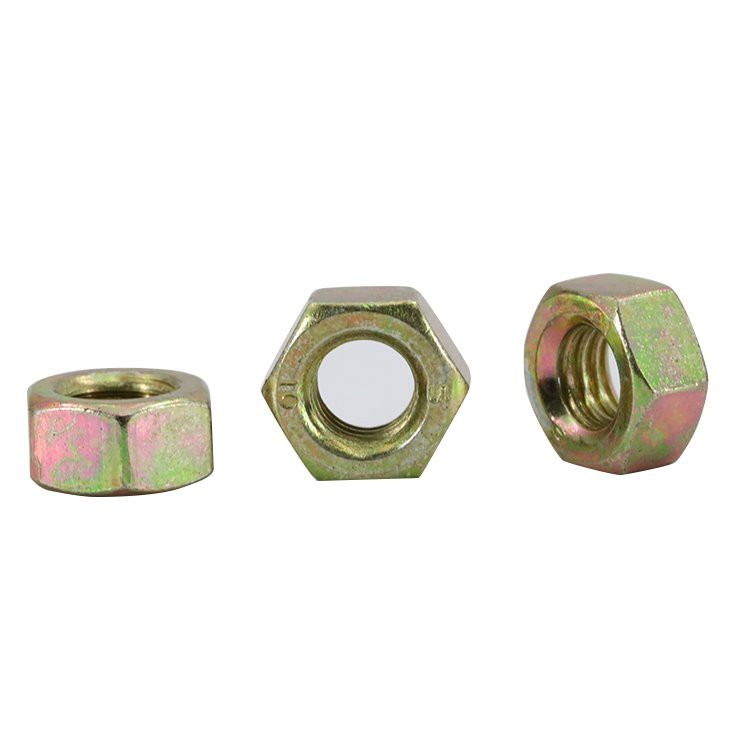
A: There are several different types of nut fasteners, including: Hex Nuts: Hex nuts have six flat surfaces and are the most common type of nut. Locking Nuts: These nuts have nylon inserts that help prevent vibration-induced loosening.
Q: What is the difference between a nut fastener and a bolt fastener?
A: A nut fastener is a type of threaded fastener that typically consists of a metal or plastic nut with internal threads that mate with the external threads of a bolt or screw to hold two or more objects together. A bolt fastener, on the other hand, is a type of threaded fastener that typically consists of a threaded cylindrical shaft, or shank, with a head at one end and threads at the other end, which usually mate with a nut. In other words, while both nut and bolt fasteners use screws, a nut fastener requires a bolt or screw to function, while a bolt fastener is a self-contained screw-like device.
Q: What are some common applications for nut fasteners?
A: Some common applications for nut fasteners include: automotive, mechanical industries, construction projects, manufacturing equipment, electrical and electronic equipment, furniture assembly, plumbing and HVAC systems, aerospace industry, and more.
Q: How do you choose the right nut fastener for your application?
A: There are many types of nuts available such as hex nuts, flange nuts, lock nuts, wing nuts, and square nuts. Choose one that is compatible with your bolt and provides the best grip. And nuts can be made of stainless steel, aluminum, brass, plastic and other materials. When selecting materials, consider environmental conditions (temperature, humidity, and chemicals) as well as the strength required for the application.
Q: What is the torque specification for tightening nut fasteners?
A: Different nuts have different torque specifications. Examples include fastener size and material, application, and manufacturer's recommendations. Refer to the manufacturer's instructions or torque chart for the specific fasteners you are using. It is also important to use a calibrated torque wrench to ensure proper tightening.
Q: How do you prevent nut fasteners from coming loose?
A: These nuts have nylon inserts that help hold the nut in place and prevent it from loosening. They are commonly used in automotive and industrial applications. And be sure to use a torque wrench to tighten the nuts to the manufacturer's recommended level. If you don't tighten enough, it may come loose, and if you overtighten, you may cause damage to the fastener.
Q: Can nut fasteners be reused?
A: Nut fasteners can be reused, depending on their condition and type of application. If nut fasteners have not been subjected to excessive torque or wear during previous use and if the threads are still in good condition, then they can be reused in the same or similar applications. However, if the nut is damaged, peeled off, or subjected to excessive torque, it is recommended to replace it with a new one. It is good practice to carefully inspect nuts before reusing them to ensure they are in good condition and suitable for the application.
Q: Are there any safety concerns associated with nut fasteners?
A: If the nut is over-tightened, it may deform or break, causing the joint to fail. And nuts made of certain materials can corrode when exposed to the elements, which can weaken the fastener and affect its performance. To avoid these problems, it's important to choose the appropriate nut size and material, follow the manufacturer's tightening torque guidelines, and regularly inspect the nuts for signs of wear or corrosion.
Q: How do you remove a damaged nut fastener?
A: Heat the nut with a propane torch for a few seconds. This allows the nut to expand and eliminate rust or corrosion, making it easier to remove. As well as loosening the nuts with an impact wrench or ratchet. Make sure to use the appropriate socket size. Or use a hammer and chisel to try loosening the nut. Place the chisel on one side of the nut and tap it with a hammer, creating a force that may loosen the nut.
Q: What is the difference between a standard nut and a lock nut?
A: A standard nut is a common fastener used to connect two objects together. It is round in shape with an internally threaded hole that matches the threads of its paired bolt or screw. A lock nut is also a type of fastener designed to provide extra security and prevent loosening over time. It has special nylon inserts or irregular shapes that help clamp the bolt tighter, making it more difficult to loosen.
Q: What is a self-locking nut fastener?
A: A self-locking nut fastener is a type of nut that is designed to resist loosening due to vibration or other external forces. It typically has a specially designed thread profile or insert that provides additional friction or resistance to movement. This helps to maintain the tightness of the nut and prevent it from backing off over time. Self-locking nuts are commonly used in automotive, aerospace, and other applications where vibration can be a significant issue.
Q: What is a wing nut fastener?
A: A wing nut fastener is a type of nut with two protruding "wings" on opposite sides of the nut. These wings are designed to be easily turned by hand, allowing for quick and easy tightening and loosening of the nut without the use of any tools. Wing nut fasteners are commonly used in applications where frequent adjustments or disassembly is required, such as on threaded rods, bolts, or screws.
Q: What is a jam nut fastener?
A: A jam nut fastener is a type of nut that is typically used in conjunction with another nut to prevent the first nut from becoming loose due to vibration or other factors. It is a thin nut that is threaded only halfway up its length and is tightened against the first nut to lock it in place. Jam nuts are commonly used in automotive and machinery applications, as well as in plumbing and electrical systems.
Q: What is a flange nut fastener?
A: A flange nut fastener is a type of nut that has a wide, flat flange at one end. The flange is designed to distribute the load of the nut over a larger area, making it ideal for use on soft or thin materials. The flange also acts as a locking mechanism, preventing the nut from loosening due to vibration or other forces. Flange nut fasteners are commonly used in automotive, construction, and industrial applications.
Q: What is a square nut fastener?
A: A square nut fastener is a type of nut with four sides that are square in shape. It is used in conjunction with a bolt or screw to secure two or more components together. The square shape of the nut is designed to provide greater resistance to loosening than a traditional hexagon nut, as it requires a specialized wrench or pliers to turn. Square nut fasteners are commonly used in construction, automotive, and mechanical applications.
Q: How do you install a nut fastener?
A: Make sure you have the correct nut fasteners and appropriate installation tools. As well as placing nuts on bolts or studs. Second, use a wrench or socket to turn the nut clockwise until it is securely tightened onto the bolt or stud. Finally, use a torque wrench or wrench to verify that the nuts are tightened to the appropriate torque specifications.
Q: What are some common mistakes to avoid when installing nut fasteners?
A: The wrong size or type of nut was used for the application. and failure to properly clean and prepare mating surfaces. Or the nut is over-tightened, possibly damaging the threads or stripping the threads completely and not using a torque wrench or other appropriate tool to achieve proper tightening.